
Late meeting
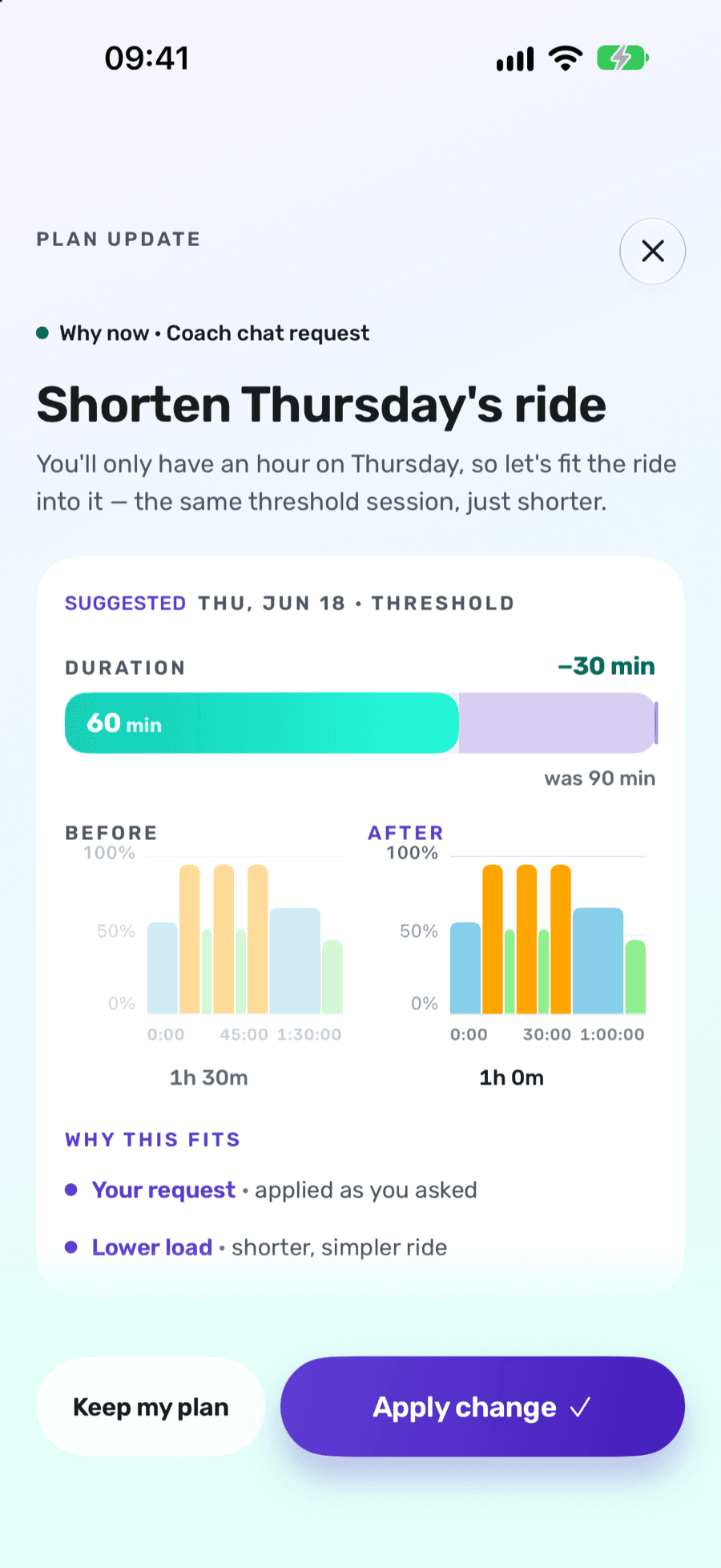
Now you only have an hour.
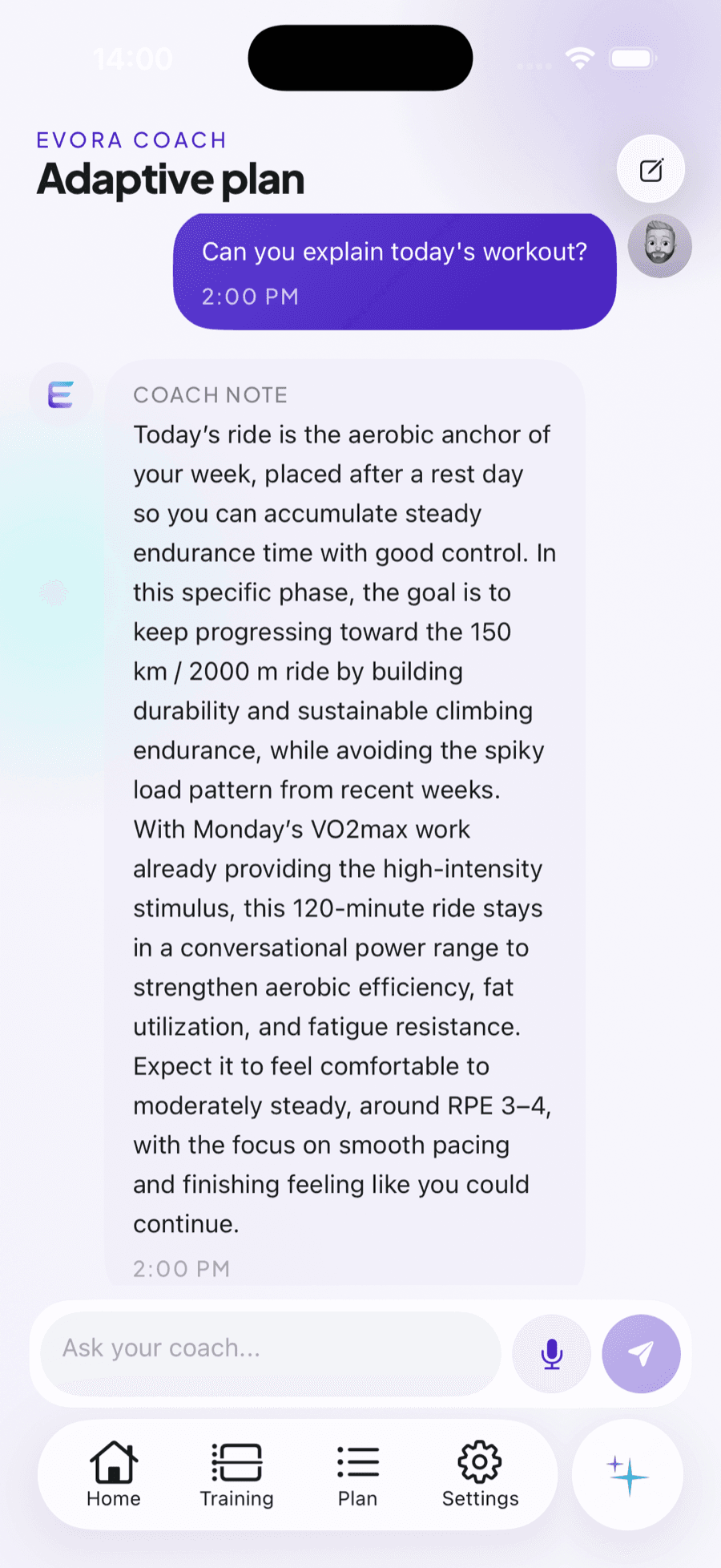
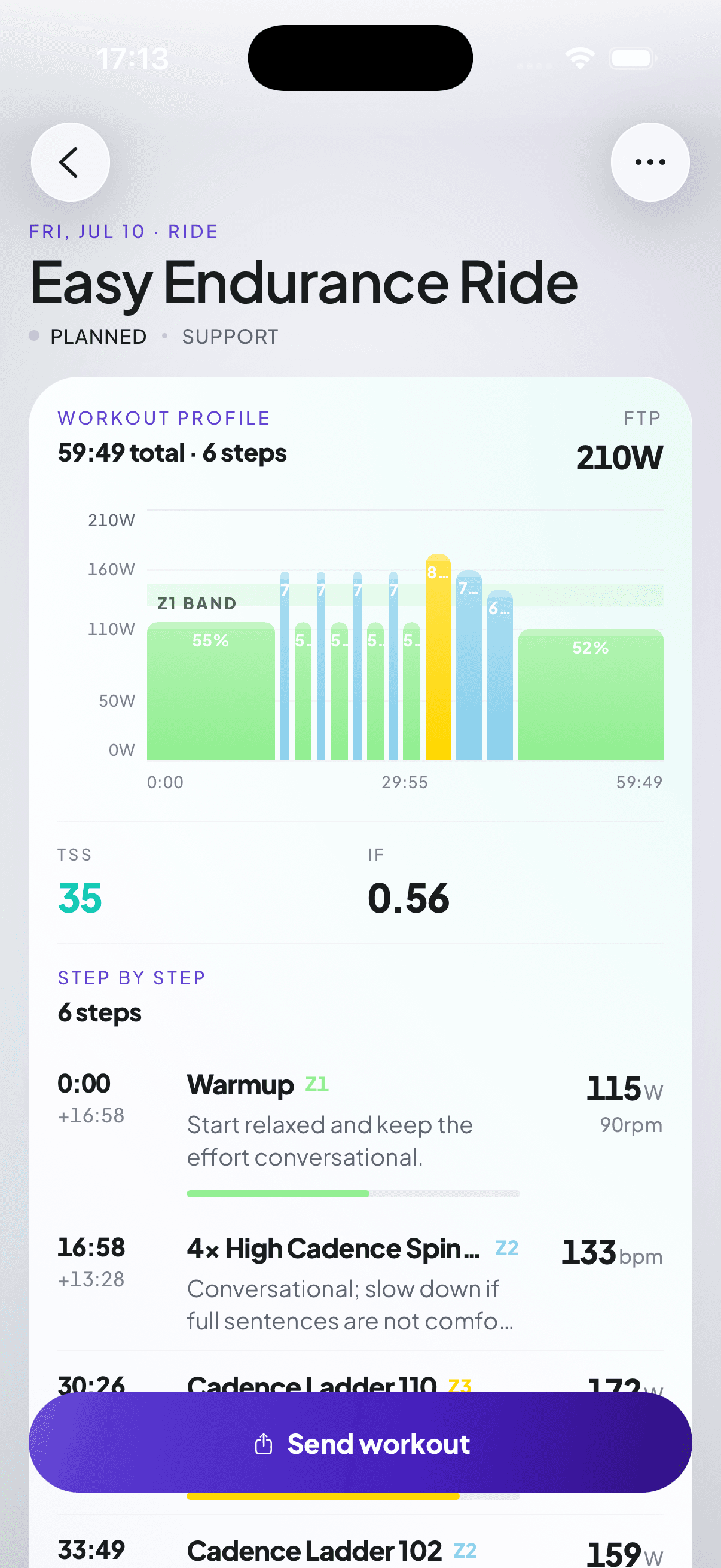
Your boss books a meeting for Thursday evening. Tell the coach, and Evora shortens the 90-minute ride to fit. You see the change first and decide whether to apply it.
For cyclists and runners with a lot going on
Tell Evora what you're training for. It builds a cycling or running plan around the time you actually have and adjusts it when your week changes.

Free to download · 14-day free trial · then $14.99/month or $109.99/year
Some weeks go sideways
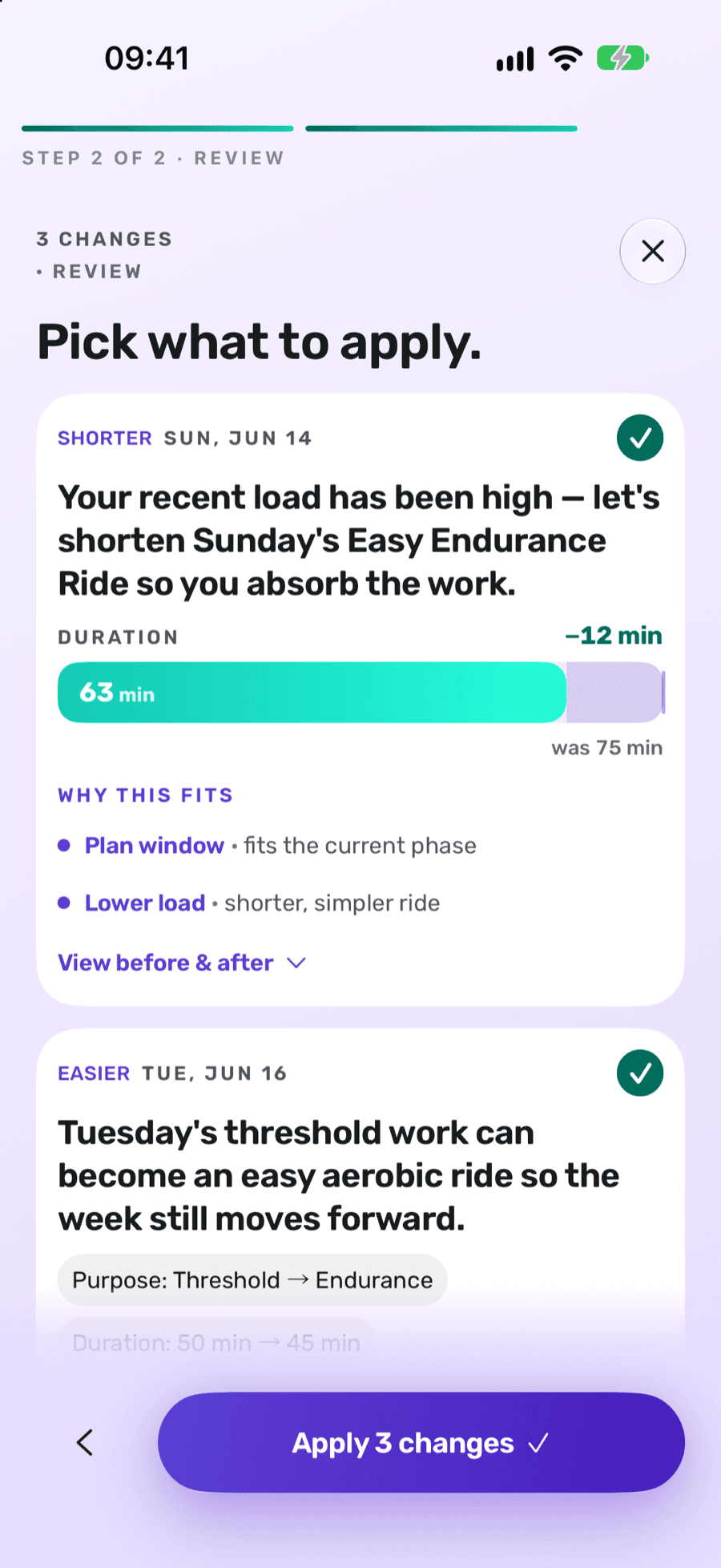
Nothing piles up. Evora fits your training into the time you have left, including today's session, and tells you why.
How Evora coaches
Late meeting
Your boss books a meeting for Thursday evening. Tell the coach, and Evora shortens the 90-minute ride to fit. You see the change first and decide whether to apply it.
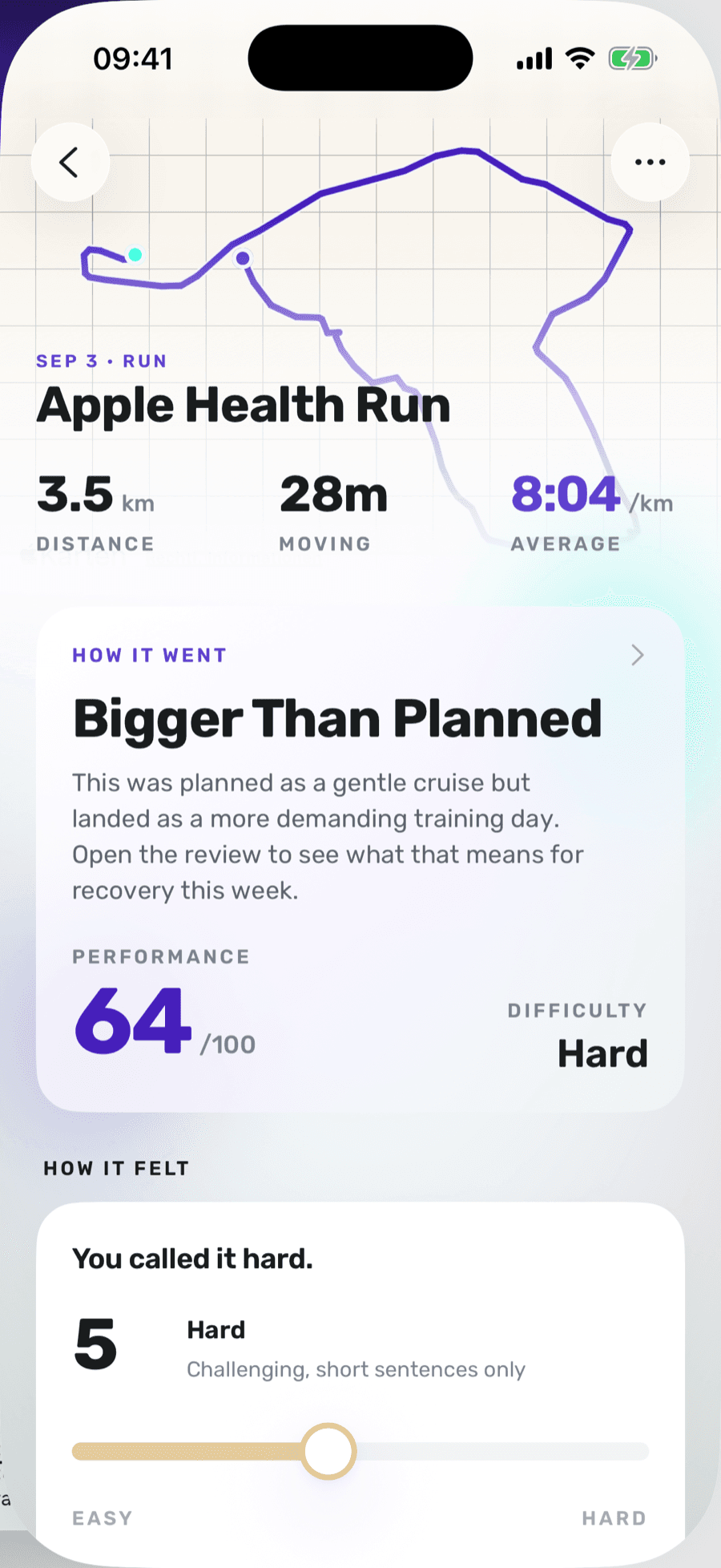
Carried away
Your legs felt good, and the easy run turned into a hard one. Evora tells you in plain words what that means for your week. Pace, heart rate and power are there too, if you want the numbers.
Busy week
Your partner is away and the kids are all yours. On Sunday you tell Evora how much time you have each day, and the plan adjusts before the week starts. If you want to know why, ask the coach.
Devices & integrations
Send planned rides and runs to your watch or bike computer. Completed sessions sync back on their own.

Imports the rides and runs your watch, bike computer or phone saves there.
Planned runs show up in the Workout app, with intervals and targets.

Planned rides go to your bike computer, and completed rides sync back.
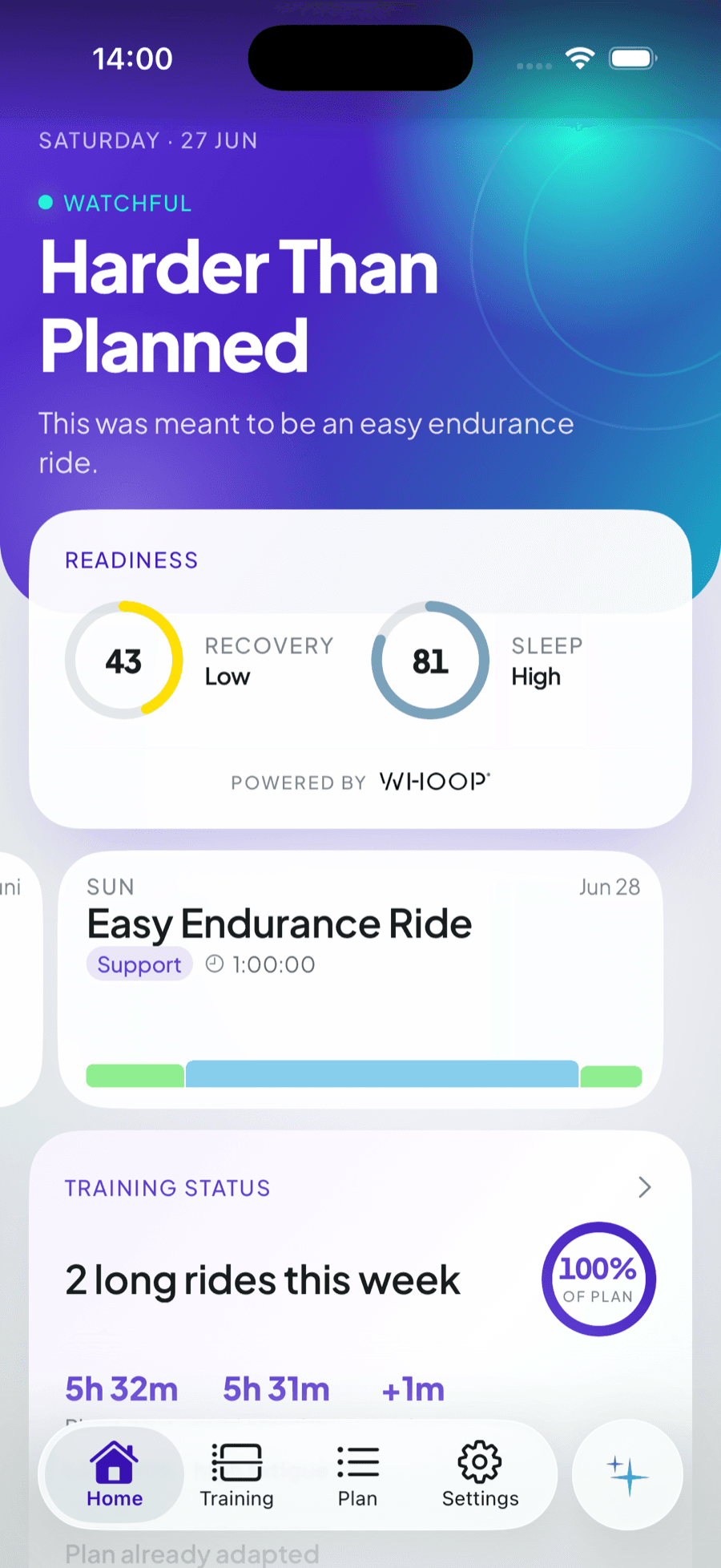
Shares your recovery and sleep, so Evora knows how rested you are.

Sends planned rides and runs on to Garmin, COROS and Suunto, and rides to Zwift. Completed sessions come back too.
Share a FIT file with Evora from Garmin, Zwift, the Files app or any other app that exports one.
Getting started
Get Evora from the App Store and sign in with Apple or Google.
Your goal, the days you can train and how much time you have on each. That's enough to build your first plan.
Connect Apple Health or a device if you like. Your first two weeks are ready in minutes, and more follow as you train.
Pricing
Evora Pro is billed through the App Store. It includes everything, and so does the trial.
Evora Pro · Monthly
14-day free trial · cancel any time
Evora Pro · Yearly
Best value14-day free trial · about $9.17 a month
New subscribers get 14 days free, once per customer. Unless you cancel at least 24 hours before the trial ends, the subscription starts at $14.99 per month or $109.99 per year and renews automatically until cancelled. Prices in US dollars; the App Store shows your local currency. Manage or cancel any time in your App Store subscription settings.
FAQ
Stored in the EU — your account and training data live on EU servers. AI coaching runs through OpenAI in the US, under EU transfer safeguards.
Never sold — no ads, no cross-app tracking, no data brokers.
Connect only what you want — disconnect Wahoo or WHOOP and that data is deleted. Workouts imported from Apple Health stay until you delete them.
Not used to train AI models — OpenAI doesn't train its models on what Evora sends.
Yours to delete — delete your account in the app, or email us. Requests are handled within 30 days.
Built around the week you actually have.
Free to download · 14-day free trial · then $14.99/month or $109.99/year